
Write narration is a technique used to tell a story or convey information in a manner that creates vivid images in the reader’s mind. Whether you're writing fiction, nonfiction, or something in between, this approach aims to make your audience feel like they are experiencing the story firsthand. Let’s break down the process step by step, so you can understand how the theory of narration works and how to apply it practically.
Step 1: Decide on the Purpose and Type of Narrative
Narration starts with understanding your purpose. Are you writing to entertain, inform, or persuade? Your purpose influences the tone, style, and structure. Narratives can be
personal (autobiographical, memoir-style),
fictional (short story, novel), or
descriptive (detailing a place or event).
- How to apply it: In real life, start by defining why you are telling the story. Is it to share a personal experience (e.g., a travel blog post), explain a process (e.g., tutorial or documentary), or immerse readers in an adventure (e.g., a fantasy novel)?
Step 2: Create the Setting and Context
A great narration has a strong sense of
place and
time. This can be done through the sensory details of your environment—sights, sounds, smells, etc. The context frames your story, making it relatable and immersive.
- How to apply it: Imagine you’re writing about a childhood memory. Instead of just stating, “I went to the beach,” create the sensory atmosphere: "The salty ocean breeze ruffled my hair as the sun warmed my back, while the distant sound of waves crashing set the rhythm of the day."
Step 3: Develop the Characters
Narrative is often driven by characters. They need to be relatable and dynamic, with clear motivations and personalities. You can either develop one main character or multiple supporting characters, but each one should have a purpose in advancing the plot.
- How to apply it: Think of your characters as real people. What are their motivations? What are their weaknesses? Even in a non-fiction story, when you introduce people, you can frame them with qualities that make them stand out in your narrative. For example: “Jake, the kind-hearted yet perpetually disorganized friend, had always been the one to pull us out of tight spots, even when we didn’t deserve it.”
Step 4: Establish a Conflict or Challenge
Every good narrative has a central conflict or problem that drives the story forward. The conflict can be internal (emotional struggle) or external (a physical challenge or event). This tension keeps the reader engaged and wanting to know what happens next.
- How to apply it: If you’re writing a personal story, perhaps the conflict is your struggle with a decision or your desire to change something in your life. In fiction, it might be a character’s fight against an antagonist or a specific event. For instance: “As the storm clouds gathered on the horizon, I knew that this was more than just bad weather. The river, which had been my calm companion for years, was now an unstoppable force.”
Step 5: Build the Narrative Structure
The structure is where you decide on the
beginning,
middle, and
end of the story. Most narratives follow a classic story arc:
Exposition (introduction) →
Rising action (problem intensifies) →
Climax (the turning point) →
Falling action (resolution) → **Denouement (the end).
- How to apply it: Map out your plot. In nonfiction, you could follow a chronological order or build up the climax of your narrative in layers. In fiction, you’ll want to create a rising action that keeps your audience’s interest, leading up to the moment of greatest tension (the climax). Then, resolve the conflict in the falling action.
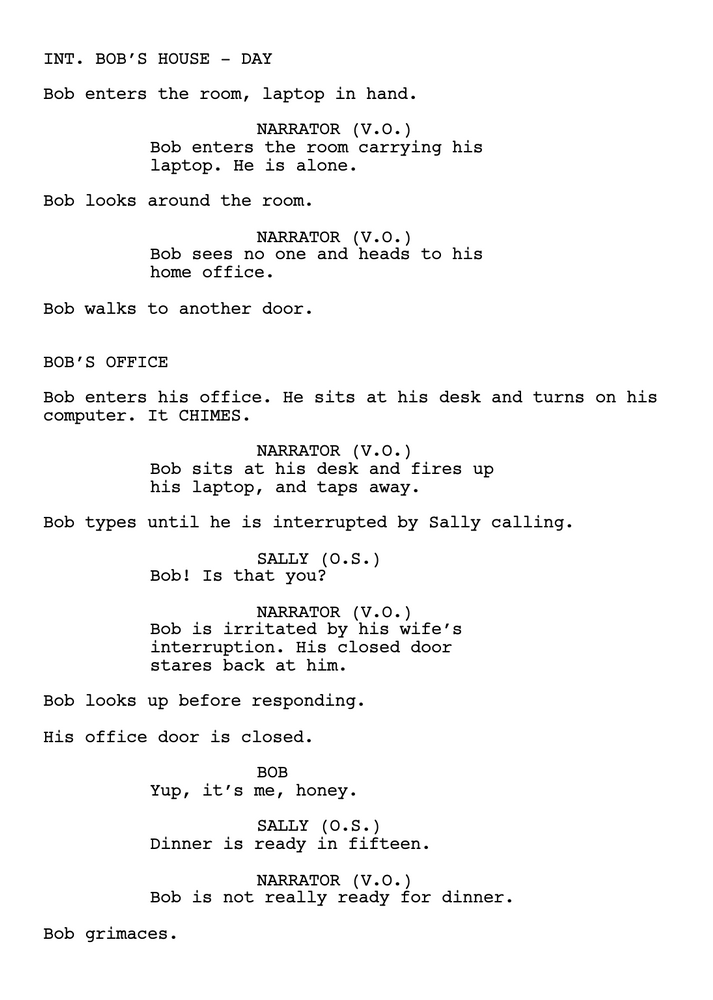
Step 6: Use Dialogue and Action to Move the Story Forward
Instead of just telling what happens,
show it with action and dialogue. This keeps the narrative active and real. Dialogue gives voices to your characters, and action keeps the pace moving.
- How to apply it: In real life, think of how people communicate. If you’re recounting a real-life experience, don’t just tell someone “We had a serious conversation.” Show them the conversation: “'You can’t keep ignoring this,' I said, my voice trembling. 'It’s too late to go back now.'”
Step 7: Use Transitions for Flow
Transition words or phrases help move your narrative from one event to another, making it feel smooth and logical. These words connect different parts of the story, whether jumping in time, place, or action.
- How to apply it: After the climax, for example, you might use transitions like "Meanwhile," "Later that day," "In the aftermath," or "As time passed." This guides the reader through your narrative without confusion.
Step 8: End with a Resolution
The end should feel like a natural conclusion to the conflict, where you either solve the problem or come to a realization. The ending should tie up any loose ends, leaving the audience satisfied with the journey.
- How to apply it: Wrap up the story thoughtfully. If you’re telling a personal story, reflect on what you learned or how you grew. If it’s fiction, conclude with the resolution of the main conflict. Example: "As the sun set on our final day in the village, I knew I would never forget this place, its people, or the quiet courage I found within myself."
Step 9: Edit for Clarity and Impact
Once the first draft is done, revise for clarity, pacing, and emotional impact. Sometimes, narrations are more powerful when you cut unnecessary details or refine descriptions to hit home emotionally.
- How to apply it: Once your narrative is written, take time to refine it. Ask yourself: Does it flow well? Are the characters relatable? Does the conflict have enough tension? Could you replace a boring description with a more vivid one?
Practical Example (Fictional):
Imagine you’re telling a story about a person overcoming self-doubt to give a speech. You might structure it like this:
- Purpose: To inspire people who are afraid of public speaking.
- Setting: A large auditorium, filled with people, late in the evening.
- Character: Jane, a quiet introvert who’s terrified of public speaking.
- Conflict: Jane must deliver an important speech to her colleagues, but she’s overwhelmed with self-doubt.
- Action: As she stands backstage, she has flashbacks to the times when she doubted herself. Then, she steps onto the stage, faces her fears, and starts speaking.
- Resolution: By the end of the speech, Jane feels a sense of accomplishment and realizes that overcoming fear is a continuous journey.
To summarize, writing narration is about more than just recounting events. It’s about using sensory details, character development, conflict, structure, and pacing to immerse the reader in the experience. It’s an ongoing process of revision, but once you understand these principles, you can apply them to any kind of narrative, whether personal, academic, or fictional.
Isn't it amazing how a simple framework can turn a boring story into an engaging one?
/background(fff)/1920x2484.jpeg?auto=webp "game narrative sample script with branches nicholas galinski")


Comments
Post a Comment